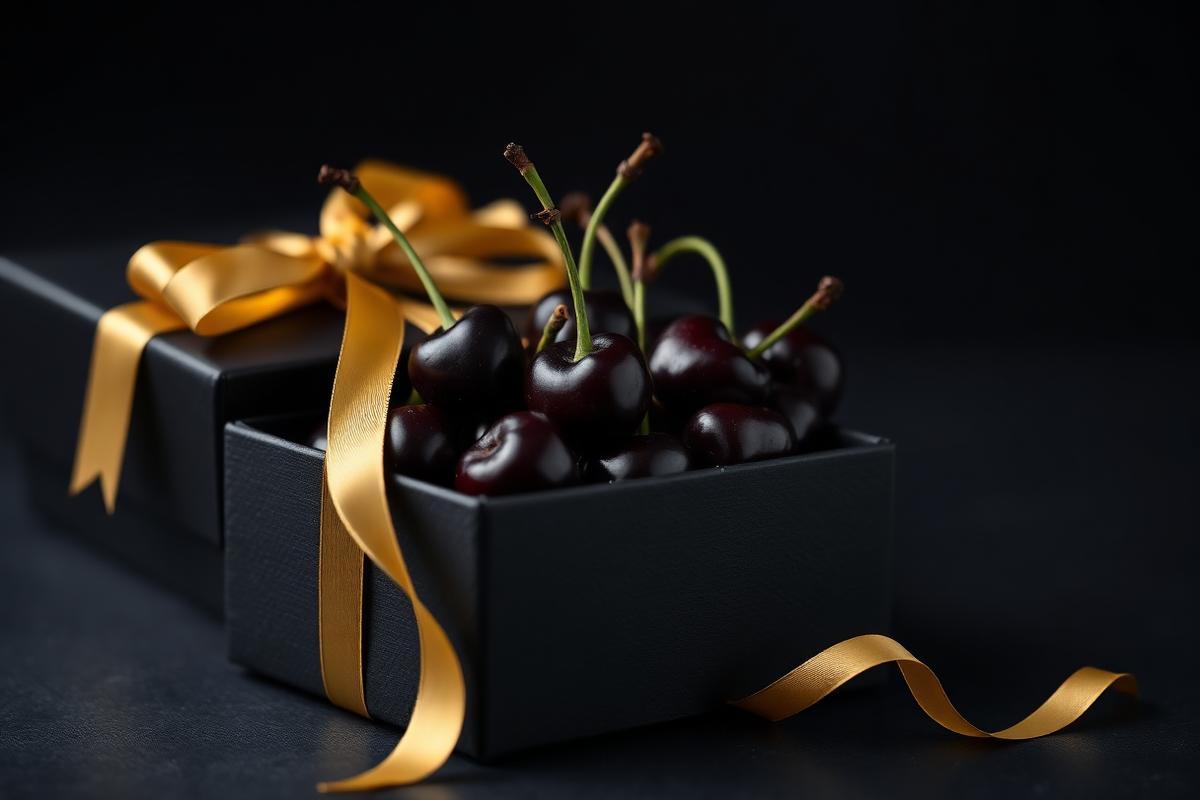
When is Tasmanian cherry season?
Tasmania's cool maritime climate delays ripening, so the island picks after every other Australian growing region. Fruit from the Huon Valley, Coal River Valley and Derwent Valley generally starts in mid-December and runs to late February, with the largest, darkest fruit arriving in January.
Because the island sits south of the mainland fruit-fly zones, Tasmanian cherries also hold market access that mainland fruit does not, which is why so much of the crop is packed for export rather than sold domestically.
Varieties worth asking for
Kordia: heart-shaped, deep mahogany, dense flesh and a long shelf life — the classic gifting cherry.
Regina: late-season, very firm, resists rain splitting, travels exceptionally well.
Lapins: large, glossy and sweet with mild acidity, the easiest crowd-pleaser.
Sweetheart: the latest picked of all, bright red and crunchy, often the February fruit.
Why export cherries cost more
Size grading: only a small share of any orchard's crop reaches 30mm and above, and that fruit is separated by hand before packing.
Hydro-cooling: fruit is cooled to near 0°C within hours of picking to stop respiration. That plant, and the electricity behind it, is priced into every kilo.
Air freight: cherries are flown, not shipped. Freight is charged on chargeable weight and rises sharply in the weeks before Lunar New Year.
Compliance: phytosanitary inspection, export certification and traceable batch labelling all add cost before the box leaves the packhouse.
How Snazzi moves them
Picked in the cool of the morning, hydro-cooled at the packhouse, then packed with gel ice into an insulated Snazzi box with a temperature logger inside.
Flown out of Hobart or Melbourne on the next available service, cleared on arrival and delivered by chilled courier — usually three to five days from orchard to doorstep.
If the cold chain breaks in transit, the logger shows it and the order is refunded.
Ordering and gifting tips
Order two to three weeks before the date you want them to land; Lunar New Year freight fills early.
A 2kg gift box suits most families; 5kg suits corporate gifting or a shared delivery.
Keep them unwashed in the fridge and wash just before eating — moisture on the skin shortens their life.
What to order
- 2kg gift box — The standard gifting size, 30mm+ fruit.
- 5kg share box — For families, offices and reunion dinners.
- 1kg taster — A first order to check the fruit and the freight.